
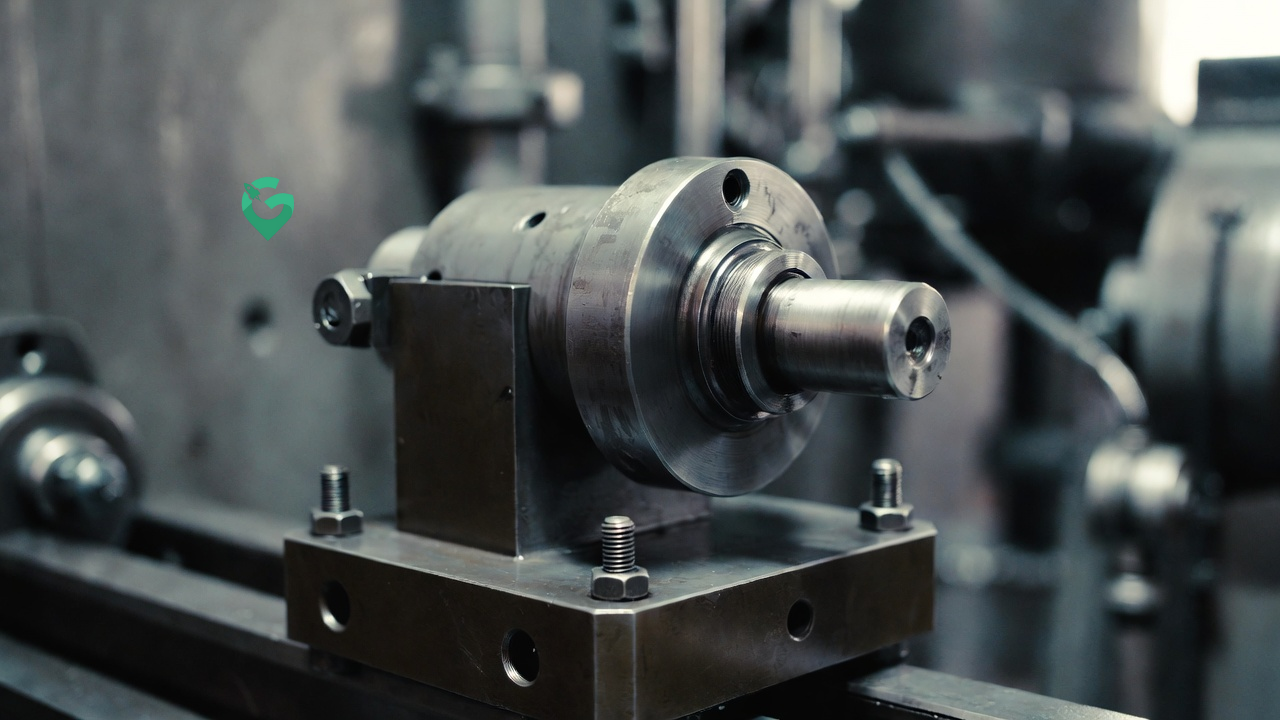
Top Winkelbohrspindel Models in 2026? Leading Industrial Manufacturers
Introduction to Winkelbohrspindel: The Essential Tool for Angled Precision Machining
In the fast-evolving world of industrial manufacturing, precision and efficiency are paramount. Enter the winkelbohrspindel, a specialized angle drilling spindle that has become indispensable for tasks requiring angled machining in tight spaces. Originating from German engineering—”winkel” meaning angle and “bohrspindel” referring to a drilling spindle—this tool redirects rotational power by typically 90 degrees, enabling drilling, milling, and tapping where straight-line access is impossible.
As we move into 2026, advancements in CNC integration and smart manufacturing have elevated the winkelbohrspindel from a niche attachment to a core component across sectors such as aerospace, automotive, and metal fabrication. With global demand for complex, lightweight components rising, manufacturers are turning to these spindles to reduce setup times, minimize errors, and boost productivity.
By 2026, the winkelbohrspindel market is projected to grow significantly, driven by innovations in materials and sensor technology. This article explores top models, leading manufacturers, and key considerations for industrial users, helping you navigate your choices to optimize performance.
Understanding How a Winkelbohrspindel Works
At its core, a Winkelbohrspindel functions by transferring torque from a machine’s main spindle to a tool holder at an angle. It employs precision gears—often bevel or hypoid—to maintain speed and power efficiency while minimizing vibration and heat buildup. Modern designs incorporate sealed bearings and coolant-through capabilities to handle high-speed operations up to 13,000 RPM, ensuring clean cuts in metals, composites, and plastics.
Unlike traditional straight spindles, which limit operations to perpendicular axes, the winkelbohrspindel adds flexibility without requiring workpiece repositioning. This not only saves time but also enhances accuracy in multi-axis CNC setups. For instance, in automated workflows, it integrates seamlessly to support tasks such as side-drilling in engine blocks or internal features in aerospace brackets. As 2026 brings more IoT-enabled machines, these spindles are evolving with real-time monitoring for predictive maintenance.
Key Applications Across Industries
The versatility of the winkelbohrspindel makes it a go-to solution in diverse fields. In aerospace, it’s crucial to machine structural components with awkward angles to ensure lightweight yet durable parts. Automotive manufacturers rely on it for precise boreholes in chassis and transmissions, reducing assembly errors and improving vehicle performance.
In woodworking and furniture production, it excels at creating angled joints and fittings in confined spaces, while metalworking benefits from its ability to handle tough materials without compromising finish quality. Emerging applications in medical device fabrication highlight its role in crafting implants with intricate geometries. With the push toward sustainable manufacturing in 2026, these spindles help minimize waste by consolidating operations into fewer setups.
Types of Winkelbohrspindel: Choosing the Right Fit
Winkelbohrspindels come in several variants to suit specific needs:
- Fixed-Angle Models: Typically set at 90 degrees, these are ideal for standard drilling and milling in CNC machines. They’re robust, cost-effective, and common in high-volume production.
- Adjustable-Angle Variants: Offering a range of 0 to 90 degrees (or more), these tilting heads are perfect for complex projects that require multiple angles in a single session, such as custom prototypes.
- High-Speed Options: Engineered for rapid operations, they maintain torque at elevated RPMs, making them well-suited for precision tasks in electronics or composites.
- Heavy-Duty Versions: Built for demanding environments, these are designed to handle high forces and are favored in heavy industry for metals and alloys.
Selecting a type depends on your machine’s compatibility, material requirements, and operational speed. In 2026, hybrid models combining adjustability with smart features are gaining traction.
Leading Industrial Manufacturers in 2026
Several companies dominate the winkelbohrspindel landscape, known for innovation and reliability:
- BENZ Tooling: A German powerhouse, BENZ offers exchangeable angle heads for machining centers, excelling in milling, drilling, and tapping. Their units feature modular designs for easy integration and are popular in composite processing.
- Alberti (via Koma Precision): Specializing in high-torque, coolant-through heads, Alberti’s Neo Series and Control Series are leaders in multi-angle machining, with models that support strict tolerances in aerospace applications.
- SYIC: As a top supplier, SYIC offers a range of drilling, tapping, and milling tools, emphasizing durability and custom solutions for CNC applications.
- Madaula: Known for high-precision 90-degree and adjustable heads, Madaula’s CA and CAR Series add extra axes to machines, making them ideal for European manufacturers focused on efficiency.
- Gerardi SPA: Fully Italian-made, their Evolution Line boasts 1-year warranties and is designed for heavy-duty use, with a focus on radial positioning.
Other notables include SOTECH for anodized aluminum housings, Eltool for coolant-driven indexable heads, and Haas Automation for integrated CNC compatibility. In 2026, these firms are investing in lightweight composites and AI-driven optimizations to stay ahead.
Top Winkelbohrspindel Models for 2026
Based on performance, features, and industry feedback, here are standout models:
- Alberti Neo Series: High-torque with coolant-through, perfect for high-speed drilling in metals. RPM up to 10,000; ideal for automotive. Priced around $5,000–$8,000.
- BENZ Angle Heads: Modular units for countersinking and tapping, with sensor integration for 2026 smart factories. Versatile for composites; starting at $4,500.
- Madaula CA Series: 90-degree fixed heads for drilling and milling, adding an extra axis. Compact and durable; suited for woodworking and metal; $3,000–$6,000 range.
- SYIC Heavy-Duty Series: Robust for grooving and tapping in tough materials, with adjustable options. High-force handling is popular in construction machinery.
- Gerardi Evolution Line: Indexable for multi-position work, with anodized finishes for longevity. Excellent for precision engineering; around $4,000.
These models emphasize reduced vibration and extended tool life, aligning with 2026’s focus on sustainability and automation.
Buying Guide: Factors to Consider in 2026
When investing in a winkelbohrspindel, prioritize compatibility with your CNC machine’s taper (e.g., CAT40, HSK63). Evaluate speed range, torque, and build quality—opt for hardened steel and sealed bearings for longevity. Brand reputation ensures better support and parts availability.
Budget-wise, entry-level models start at $2,000, while advanced ones exceed $10,000. Look for features like automatic tool changing and IoT connectivity. Always consult the technical data from manufacturers such as Sandvik Coromant for seamless integration. Test for noise and vibration to avoid costly downtime.
Future Trends and Innovations
Looking ahead, 2026 will see winkelbohrspindels with integrated sensors for real-time temperature and performance data, enabling predictive maintenance via AI. Lighter materials, such as composites, reduce weight, while modular attachments enable quick swaps. As Industry 4.0 advances, expect greater connectivity for optimized workflows.
Goten
Conclusion: Elevating Your Manufacturing Game with Winkelbohrspindel
The winkelbohrspindel remains a game-changer for precision machining, offering unmatched access and efficiency. With top models from leaders like BENZ and Alberti, 2026 promises even greater innovations. By selecting the right type and manufacturer, you can enhance productivity and stay competitive in a demanding market.