
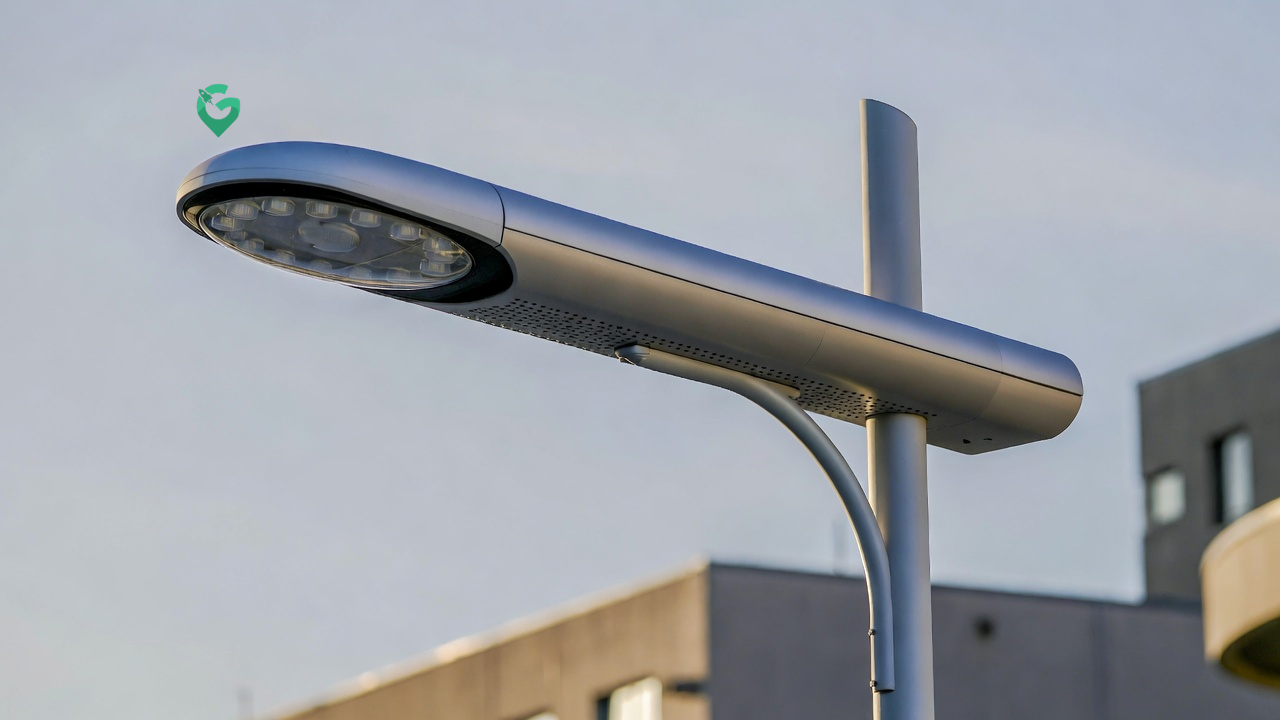
Self-Cleaning Street Lamp Research: Does a Dust-Resistant Lamp Project Exist?
In urban and rural landscapes alike, street lamps play a crucial role in ensuring safety, visibility, and energy efficiency. However, in dusty, arid, or polluted environments, these fixtures often accumulate grime, reducing their effectiveness and increasing maintenance costs. This has prompted research on self cleaning street lamp research dust resistant lamp project exist, particularly dust-resistant lamp designs that aim to mitigate these issues. The question arises: Does such a dust-resistant lamp project exist? The answer is a resounding yes. Through innovative technologies like electrostatic cleaning, mechanical brushes, and IoT integration, several research initiatives and commercial deployments are already transforming how we illuminate our streets. This article examines the motivations, advances, and real-world applications of these projects, highlighting their potential for sustainable urban lighting.
The Need for Self-Cleaning Street Lamps
Dust accumulation on street lamps, especially those powered by solar panels, poses significant challenges. In desert regions like the Middle East or agricultural areas in Africa, sandstorms and pollen can reduce solar efficiency by up to 40-50%, leading to dimmer lights and shorter operational times. Traditional cleaning methods—manual scrubbing or water-based systems—are labor-intensive, costly, and environmentally unsustainable, particularly in water-scarce areas. For instance, in oil palm plantations, heavy dust and oil mist from processing can cause 30-40% energy loss within months, necessitating frequent interventions that incur costs exceeding $300 per unit annually.
This problem is exacerbated in smart city contexts, where street lighting must integrate with broader infrastructure for energy conservation and safety. Research shows that unclean surfaces not only reduce light output but also accelerate component degradation, thereby shortening the lifespans of LEDs and batteries. As cities pursue green energy targets, such as Net Zero by 2050 in countries like the UAE, demand for self-cleaning mechanisms has increased. These innovations promise reduced maintenance, prolonged equipment life, and consistent performance, making them essential for off-grid and harsh-climate installations.
Current Research and Technologies
Research on self-cleaning street lamps has evolved rapidly, with a focus on dust-resistant designs that incorporate advanced materials and automation. One prominent technology is electrostatic dust removal, inspired by studies on solar panel cleaning. This waterless method employs adsorbed-moisture-assisted charge induction: dust particles, often silica-based, absorb ambient humidity, thereby behaving as conductors under high voltage (approximately 12 kV). An electrode induces a charge, creating a repulsive Coulombic force that ejects particles without physical contact. Lab tests demonstrate up to 95% recovery of lost power for particles larger than 30 μm, with negligible energy use. Although primarily designed for solar panels, this approach could be adapted to street lamps by integrating transparent electrodes; however, it requires humidity above 30% and may be susceptible to fine dust.
Another approach involves mechanical self-cleaning systems. Companies such as Sresky have developed solar street lights with high-speed rotating brushes that activate on schedule, sweeping away dust, snow, and debris in seconds. These brushes incorporate antifreeze features for cold climates and guide-rail designs to prevent rainwater intrusion, thereby enhancing dust resistance. Similarly, BOSUN Lighting’s systems employ nano-hydrophobic coatings on panels to repel dust, combined with automated wipers or brushes triggered by sensors or timers. These use less than 2% of daily energy and maintain 95% output efficiency.
Academic research further bolsters these efforts. A study on IoT-based self-cleaning smart city street lighting proposes designs guided by green principles that incorporate sensors for real-time monitoring and automated cleaning schemes. Technologies such as Pro-Double MPPT controllers optimize charging while integrating cleaning cycles, ensuring seamless operation in diverse environments, from humid Asia to dry North America.
Real-World Projects and Case Studies
Dust-resistant lamp projects are not just theoretical; they are actively deployed worldwide. Gletscher Energy’s Stellar Series lights are deployed in Middle Eastern deserts, where robotic brush arms clean panels daily, maintaining over 90% energy yield despite haboobs. In Saudi highways and UAE parks, these off-grid units with LiFePO₄ batteries provide 3-5 nights of autonomy, integrating motion sensors and IoT for smart management. Performance data indicate superior longevity, with no routine maintenance and lower costs.
In Africa’s oil palm belt, BOSUN’s project in Port Harcourt, Nigeria, installed 180W LED lights over 9 km of roads. Exposed to dust, humidity, and oil mist, the self-cleaning wipers reduced maintenance by 90%, thereby reducing CO₂ emissions (0.4 tons per lamp annually) and improving safety by reducing nighttime accidents. Expansions to Ghana and Côte d’Ivoire highlight scalability.
Sresky’s lights, deployed in Nordic winters and African heat, demonstrate versatility. Their brush systems extend lighting time and reduce labor, demonstrating effectiveness in real-world tests across continents.
Challenges and Future Directions
Despite progress, challenges persist. Electrostatic methods perform poorly in low-humidity conditions, and mechanical systems may wear over time, although designs are marketed with 10-year lifespans. High initial costs for coatings and IoT could hinder adoption in developing regions, and finer particles (<30 μm) often require hybrid approaches.
Future research may integrate electrostatic and mechanical technologies with AI for predictive cleaning, optimizing cleaning based on weather data. Expanding to non-solar lamps and integrating with smart grids could broaden impact, aligning with global sustainability goals.
Goten
Conclusion
Research on self-cleaning street lamps and dust-resistant lamp projects is thriving, driven by the need for efficient, low-maintenance lighting in challenging environments. From electrostatic innovations to commercial deployments by Sresky, BOSUN, and Gletscher Energy, these advancements promise brighter, greener cities. As technology evolves, widespread adoption could revolutionize urban infrastructure, reducing costs and environmental footprints while enhancing safety.